
GPS-verified reimbursement, no paper, no double receipts
Travel allowance derived from GPS by vehicle rate, receipt capture, caps, and tamper protection.
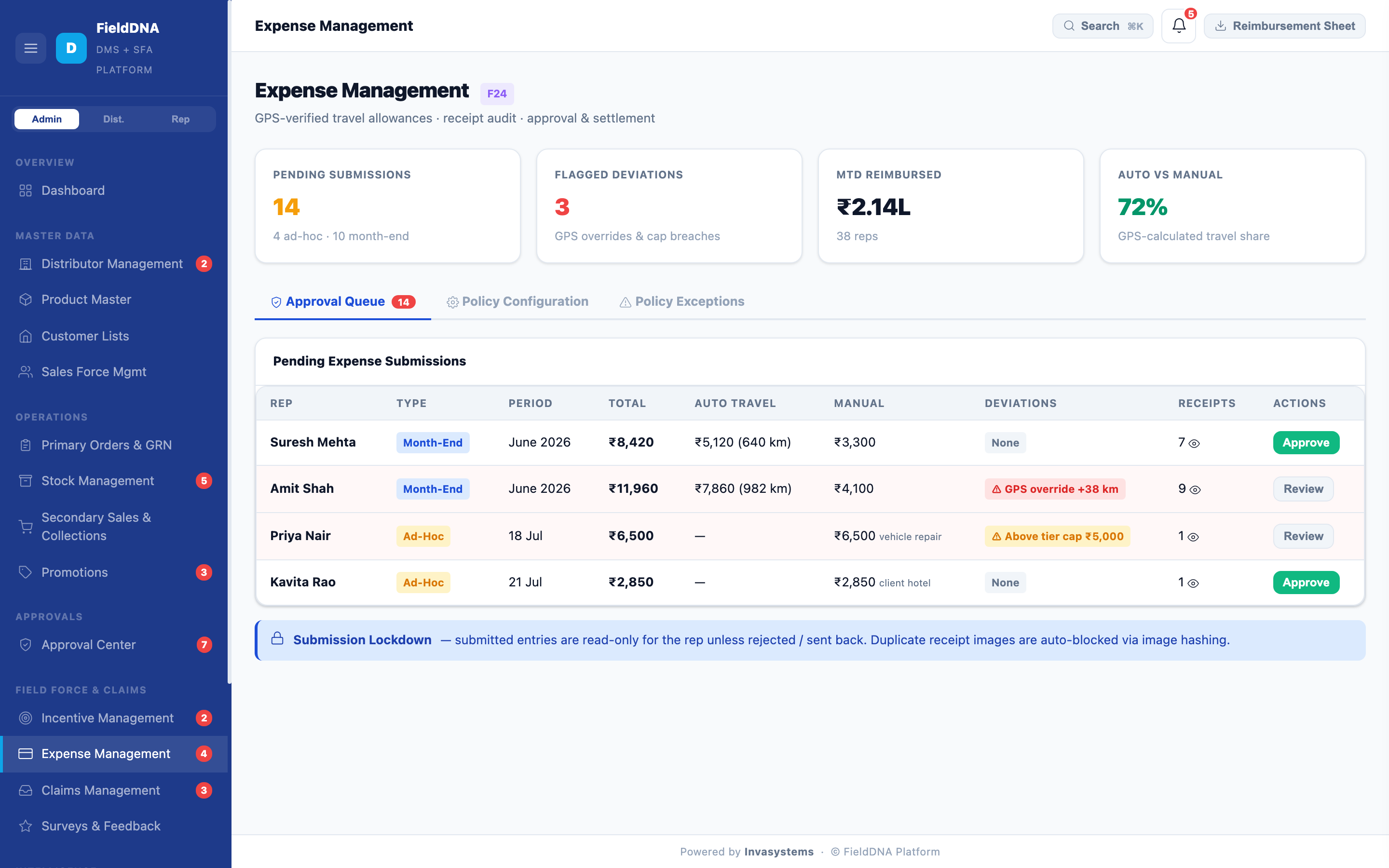
What it does
- GPS-derived travel allowance by vehicle rate
- Receipt capture with ad-hoc or wallet submission
- Caps and deviation handling
- GPS tamper protection and duplicate-receipt hashing
- Visit-to-expense audit map
- Approval workflow into payroll or credit note
How it works
- 1Move
- 2Capture
- 3Submit
- 4Approve
- 5Reimburse
KPIs you will track
- Reimbursement cycle
- Exceptions
Who it is for
- Reps
- Managers
- Finance
A closer look
Allowance derived from the GPS trail
Travel allowance is computed from the GPS trail at the vehicle rate, so the number follows where the rep actually went. Receipts are captured ad hoc or from a wallet, and caps and deviation handling keep claims inside policy.
No paper, and no double receipts
GPS tamper protection and duplicate-receipt hashing block the two most common forms of expense leakage, and a visit-to-expense audit map lets a manager tie spend back to the calls it belongs to.
Straight through to reimbursement
An approval workflow routes the approved claim into payroll or a credit note, so reimbursement is part of the same flow rather than a separate month-end exercise.
Frequently asked questions
How is travel allowance calculated?
From GPS by vehicle rate, with receipt capture and caps.
How do you prevent expense fraud?
GPS tamper protection and duplicate-receipt hashing, plus a visit-to-expense audit map.
Ready to run your distribution chain from one platform?
Live walkthrough on Microsoft Teams · Tailored to your distribution model · Works on web, Android and iOS