
Payouts calculated from realised revenue, not spreadsheets
Slab-based incentives with a collection guardrail, a rep what-if calculator, approvals and clawback.
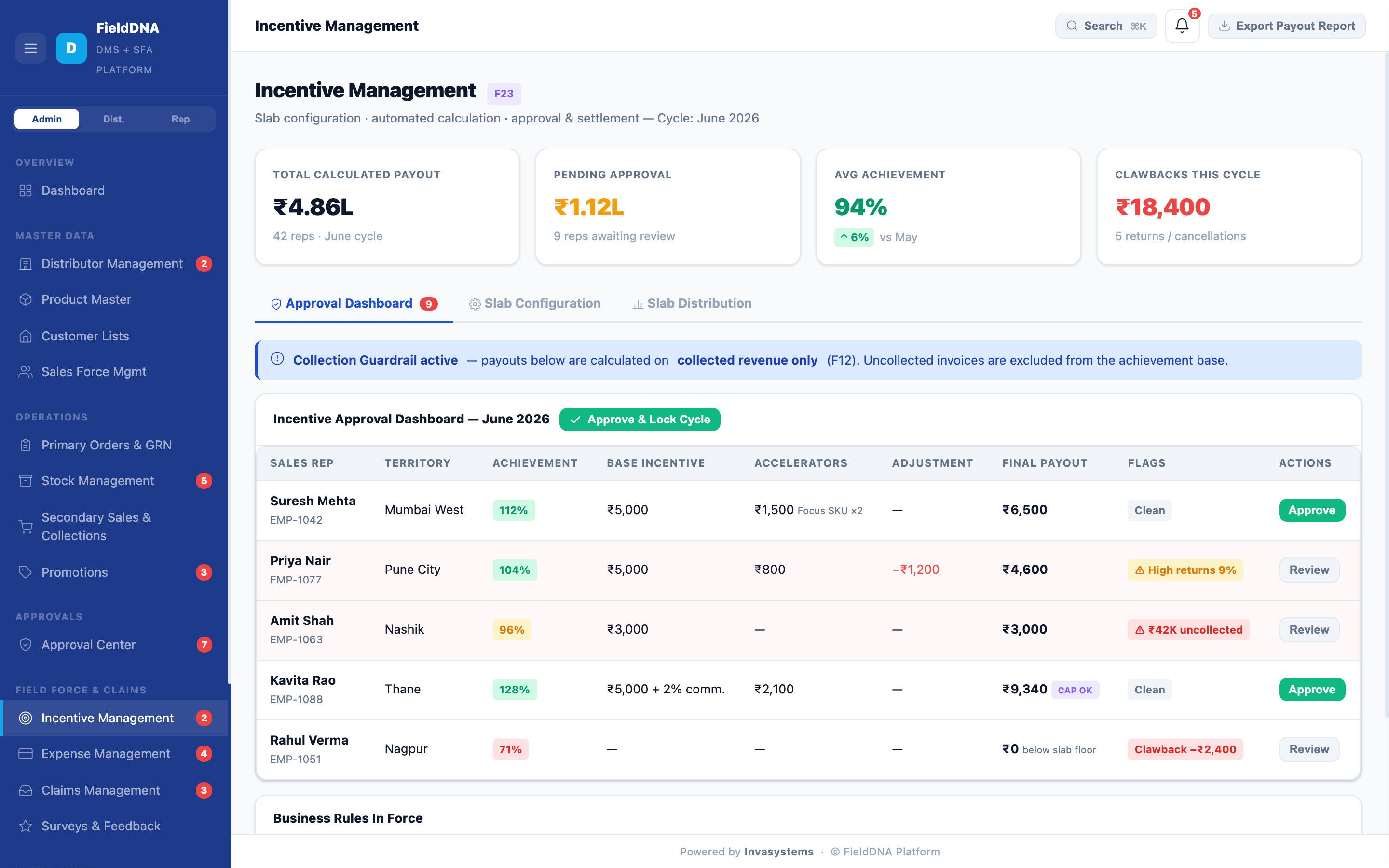
What it does
- Flat or percentage slabs with SKU multipliers
- Automated monthly cycle driven by targets
- Collection guardrail so payout follows realised revenue
- Manager approvals with anomaly flags
- Rep earnings summary and a what-if calculator
- Payroll export or auto credit note, with a clawback ledger, caps and locking
How it works
- 1Set slabs
- 2Cycle
- 3Approve
- 4Settle
- 5Clawback
KPIs you will track
- Payout accuracy
- Cycle time
Who it is for
- Sales leadership
- Finance
- Reps
A closer look
Payout calculated from realised revenue
Incentives run on flat or percentage slabs with SKU multipliers, cycled automatically each month against targets. A collection guardrail ties payout to money actually realised, so the scheme rewards closed business rather than orders that were never paid for.
Transparent to the rep before payday
Each rep sees an earnings summary and a what-if calculator, so they can see how another order or collection changes the payout. Manager approvals carry anomaly flags, which surface the outliers worth a second look.
Settle cleanly, recover when needed
Settlement exports to payroll or posts an automatic credit note, and a clawback ledger with caps and locking handles the cases where an earlier payout has to be recovered. The calculation leaves the spreadsheet behind entirely.
Frequently asked questions
Are payouts tied to collections?
Yes. A collection guardrail ties payout to realised revenue, not just booked sales.
Can reps see their earnings?
Yes, with an earnings summary and a what-if calculator.
Is there a clawback mechanism?
Yes, a clawback ledger with caps and locking, and payroll export or auto credit note.
Ready to run your distribution chain from one platform?
Live walkthrough on Microsoft Teams · Tailored to your distribution model · Works on web, Android and iOS